How to Discover Your Life Purpose: A Simple Guide

Finding your purpose can make a big difference to your mental health. When life feels confusing or overwhelming, having a clear purpose gives you focus, motivation, and direction. The image above shows a simple way to discover your purpose by bringing together three key areas:

Visions, Goals and Actions.

  1. Visions – These are your dreams and the kind of life you want. What do you care about? What future do you imagine for yourself? Your visions guide you toward what truly matters.
  2. Goals – These are the specific things you want to achieve. They give structure to your vision. Goals help you measure progress and stay motivated.
  3. Actions – These are the steps you take every day. When your actions support your goals and visions, you move forward with purpose.

When all three (your visions, goals, and actions) come together, they meet in the centre. That’s your PURPOSE. Living in this space brings balance and peace of mind. You feel like what you do matters, and that helps protect your mental health and PERFORM at your best.

Start small. Think about your dreams, set a few clear goals, and take daily actions toward them. Over time, you’ll find yourself living with more purpose, confidence, and calm.

As the image says, “When these 3 elements align, your purpose is fulfilled.” And with purpose, your mental health grows stronger.

How do you feel?

Cue default answer “I’m fine” or “I’m OK”.

True? We all do it. We’ve been conditioned to not share our truth of how we feel – for fear of judgement, burdening others or not being worthy of support – but this lack of honesty means a lack of connection to ourselves and asking ourselves that valuable question of “how do I feel?”.

So ask yourself right now… “how do I feel?” 

Can you identify your emotions? How you’re feeling right now?

The sooner we can become aware of the exact emotions we are feeling, the easier it becomes to manage those emotions and managing our emotions means we can flourish, PERFORM at our best and protect our mental health.

Now don’t worry if you can’t identify your emotions – that’s not unusual – and sometimes we just don’t have the language to verbalise what we feel.

But here’s a little method to try. Take a look at this wheel of emotions and match a word to how you feel.

Next, take a moment to consider what’s going on for you when you identified this emotion. Is what you’re doing in the moment impacting your feelings in the moment? It’s always good to check in with yourself and be aware of what you’re feeling and then you can take action in your life as appropriate.

… and if you’re asking someone else how they are and they reply with “fine” or “OK” – ask them twice… it shows you have an intention to listen, care and are a safe person for them to share with.

Managing Relationships: How People Impact Our Lives

People can make us or they can break us, whether that’s in business or our personal lives. This is one thing in life you can guarantee…along with death and the tax man!

I’ve taken this life class, the one where you discover what people can really do to you, the result being I pretty much lost everything; materially, physically, financially but most of all mentally. There was a time when actions of so-called ‘friends’ left me in a place I never thought I’d be, and once I was there it felt like a place I would never escape from. Why did they do this? Probably because they’re human, they can, it’s easier to destroy someone else than admit your own inadequacies.

But over time it’s taught me how to deal with people in both my personal and business life. How to negotiate characters, how to differentiate good from bad, useful from harmful and so on; but most importantly how to be around people that are good for me and be brave enough to remove myself from the company of those that are not.

People are one of the biggest motivators or biggest drains on our lives. They can support, encourage and inspire us to great things but in equal measures they can drain us mentally, physically and financially.

Who are Some of the People in Our Lives?

* family * friends * clients * colleagues * employees & team members * competitors

What are some of the things they require from us?

Family

* un-conditional love * expectations to be there for them and do everything at any time * cooking, cleaning, shopping…all domestic duties * earn money, pay bills, give out pocket-money * control arguments, fight fires (not in the literal sense)

Friends

* understanding * expectancy to be on ‘their side’ * someone to rely on in tough times & someone to share fun times with * a 24-hour support network * validation * trust and respect

Clients

* help & support (24-hour) * validation * expect you to go above and beyond * fairy Godmother/father * perfection

Colleagues

* help & support * having ‘their back’ * trust and support * mutual regard * high expectations

Employees and Team Members

* help and support and ‘hand holding’ * training & mentoring * trust * praise

Competitors

* competition * failure * inspiration * validation * clients * mistakes

We can be in contact with all these people in any one day and this makes for an awful lot of different demands from many people of just one person; you.

This is physically and emotionally draining and the demands placed on us affect us in so many different ways.

How do People Affect Us?

* our feelings * the support (or lack) of us * make us or break us * success or failure

Think about someone you have had close contact with in recent days – it may be a friend or family member, client, colleague, employee or competitor.

  • What did they require of you?
  • What did you give them?
  • How did you make them feel?
  • What did they give you in return?
  • How did this make you feel?

How do we Manage These People?

When different people want so much of us we have to learn how to manage these people. We can’t burn ourselves out for the benefit of everyone else. It’s time to put yourself first. So, here’s a few hints on how to manage people:

  • First up, look after yourself or you’re no good to anyone. Eat well, exercise, sleep, enjoy things in your life. That’s the first way we can start to manage the people in our lives.

  • Blend: blend what you want and what you need with what you can give.

  • Don’t give to other people more than you give to yourself.
  • Be honest and transparent. Don’t tell or give people what they want, tell them or give them what they need.
  • Go the extra mile for clients. It will make you feel good.
  • Don’t be bullied by family and friends. If you don’t or can’t give them what they want, don’t beat yourself up about it.
  • If you don’t like someone or they are ‘toxic’ in your life, bin them. Don’t be scared to do that to family either. Just because you’re related doesn’t give them the right to break you.
  • Don’t keep giving second chances to people. There’s only ever one second chance.
  • Be kind and loving to everyone that deserves it from you.
  • Be respectful and trusting to those that deserve it from you.
  • Treat people as you wish to be treated.
  • Don’t always be the listener. Turn to people for help and support, be that a mentor, colleague or friend.
  • Be kind to competitors (they’ll hate it for starters!).
  • Be confident in yourself and your brand, this will help you hold your head high against any ‘haters.’ (remember that quote “hustle until your haters ask if you’re hiring”).
  • Love what you do and do what you love…. if you do, no-one can destroy you.

Tips to Cope with Grief at Christmas

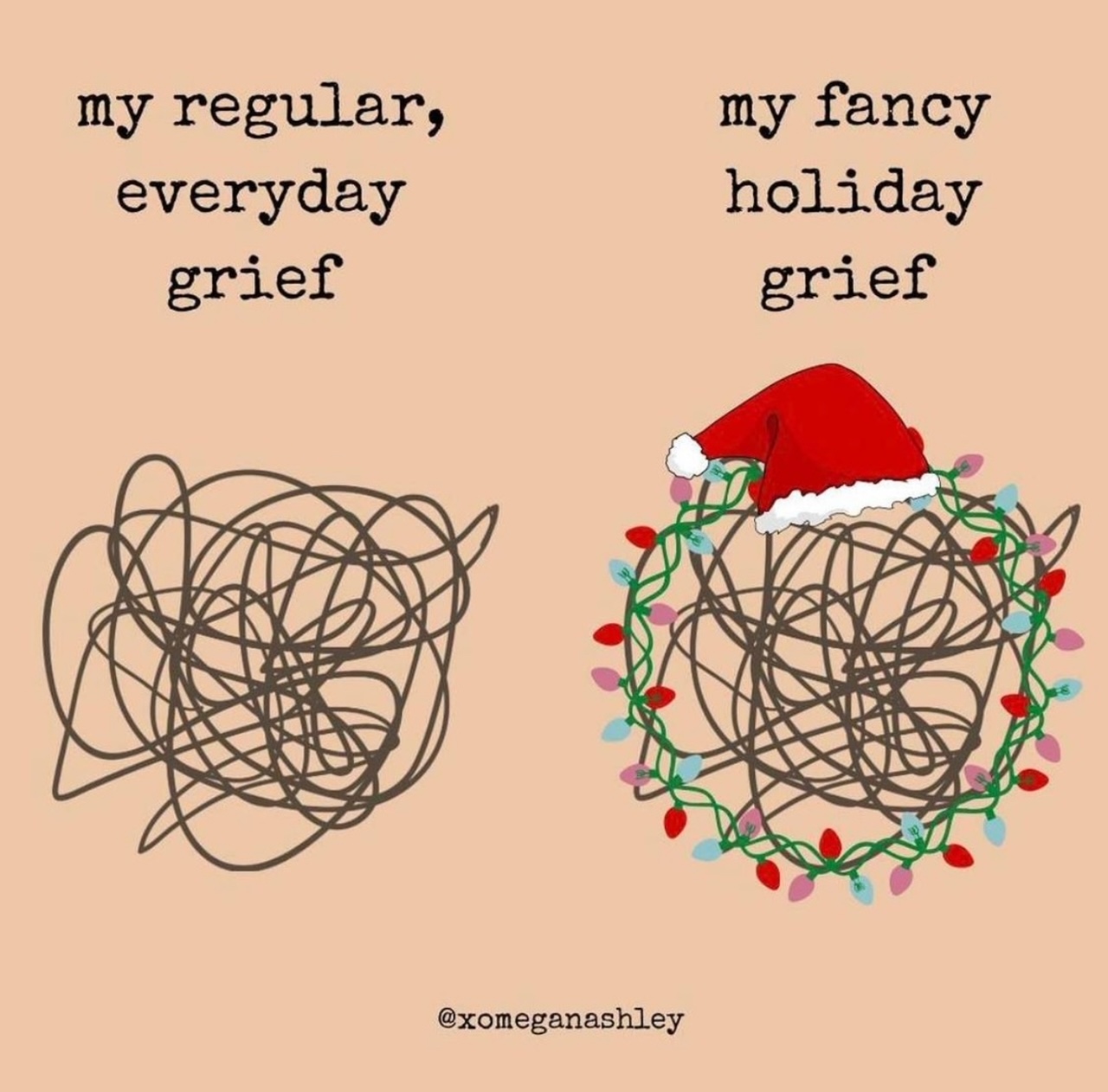
Living with grief… it gets a bit spicier around the festive period.

Whether you’re widowed, mourning the loss of a parent, sibling, child, friend, colleague, pet, job, lifestyle, relationship or anything else, grief weighs a little heavier in the holiday season.

The empty chair, the absence of a special gift, the lack of someone to ‘cheers’, the expectation to always be ‘on’ and happy and merry… it’s hard and if it’s not the grief itself that’s making us tired, it’s the expectation we put on ourself to mask our grief so not to enhance the discomfort of others.

Living with grief is hard… every…single…day…of…the…year… but we can get really good at nurturing that grief, embracing it, growing with it and flourishing—opening ourselves up to incredible love and achievements. That’s a just a little harder to around Christmas time.

I get it… it’s been my truth since 1994—my first Christmas without my Dad. My Dad died in the previous April and by December it felt like any need I may have had for grief support (which I never received) in the way I needed it had been completely dismissed. So I suppressed all those hard emotions… because that’s what we do isn’t it? Minimise our own pain to make other people feel more comfortable.

I’ve had decades of practise and my reality of 1994 was reignited since 2018 after my husband Simon died one month before the Christmas festivities were due to begin. BUT… and this was a huge gamechanger… that year I had the most amazing friends around me who gave me permission to be sad and cry all whilst being connected and celebrating. It was a hard Christmas day due to the rollercoaster of emotions… but it was good to feel that my grief was honoured, allowed and expected and I was able to still have fun.

As a widow, I acknowledge that emotions can feel heavier at Christmas time so I make space for them. Here’s 3 of my tips for how you can make space for your grief this Christmas time.

  1. Have a date with your grief! Make time for your grief by setting aside some designated time to have some controlled crying or quietness. Now this doesn’t mean sitting with your real-life sadness but rather using other fictional or non-fictional stories as an aid. I know there are certain movies (especially cheesy Hallmark ones!), TV shows (usually USA medical dramas but also a Neflix show called ‘from Scratch’), books or storylines that will resonate with me and make me cry. So I watch them purposefully in a way to release those trapped emotions, do some ugly crying and release exactly what needs to be released. It’s really freeing.
  2. Include the loved one you have lost. I know, sounds kind of weird but bring something into your celebrations that they would love or get involved in if they were still here – you can make it a new tradition. My husband Simon had the greatest repertoire of crap jokes known to man so every year we have the ‘Kerwin Crackers’ full of jokes he used to tell. It brings hilarity and acts as a conversation starter for funny stories and memories of Simon, which is joyous.
  3. Make time for you. It is so easy to think we have to make Christmas amazing for everyone else, but in the process of doing that it’s very easy to forget about ourselves and our needs. Schedule some non-negotiable time for you to do something YOU love. This one isn’t about releasing emotions or honouring the person or thing you’re grieving. This one is about increasing all YOUR happiness hormones and spending time doing something YOU love for YOU… because YOU deserve it.

If you are learning to live with your grief then check out my carefully curated resources over at www.theperformexperience.com – click on the learning platform and find the ‘Living with Grief’ course…

… and if you’re looking to move forwards and flourish with your grief, check out the ‘Growing with Grief’ course…

Much Love

Tabby x

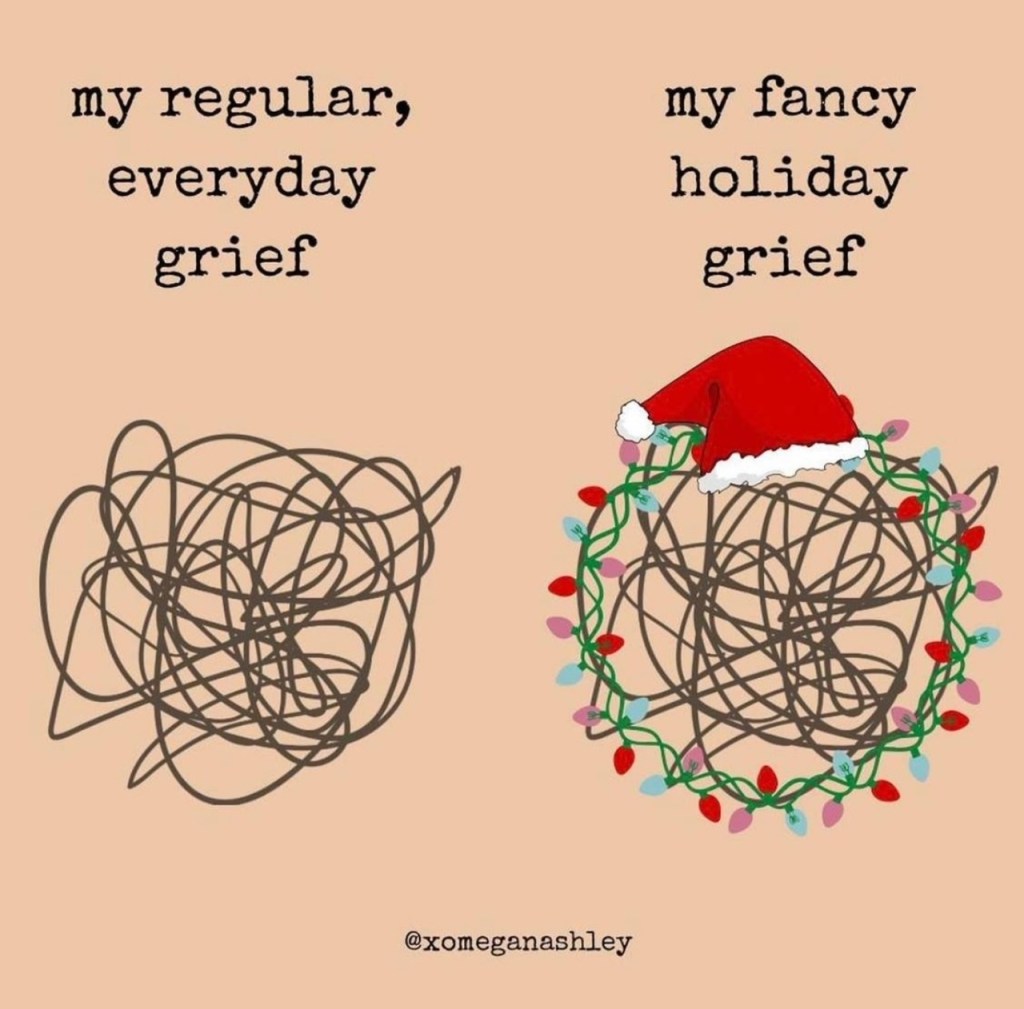
Image: @xomeganashley on Instagram

Key Tips for Helping Trauma-Affected Friends

Sometimes it’s hard to know what to say and do when someone is experiencing something tough so here’s a few pointers.

Following a traumatic event people may have trouble sleeping, eating, processing and talking, or the opposite may be true.

The experience may bring up past experiences and pain.

There may be thoughts of “what if?”

There is a complex mix of symptoms someone might experience and there is no right or wrong way for them to behave.

Give them the time, space, support and safety to manage their emotions as they need to without judgement.

It is normal for symptoms to last around 2 weeks after a traumatic event so allow that time and encourage someone to look after themselves with rest, hydration, some gentle activity, nutrition and connection.

Give them the space to process whilst checking-in with genuine concern and support and show this in your words and actions. Don’t burden, criticise or blame them. Ask them what they need and how you can help them best.

If after 2 weeks symptoms are still prevalent then signposting to further help may be helpful.

Don’t let your own judgements, beliefs and experiences become a block to the way you can support someone else.

Choosing a Positive Mindset: Your Path to Mental Health

“I wish it could be how it used to be.”

… this is a phrase that comes up frequently in client coaching conversations.

People wishing life was ‘what they expected’, ‘what they hoped for’ or ‘carrying on in the same way it always has,’ because that’s what is familiar and comfortable.

Of course, when we experience a loss of any sort, often that is a natural thought. I mean, I definitely wish my husband Simon was here, alive and our life was together.

But the reality is he’s not and it isn’t. Life had to change and that’s hard and painful, but that is the reality… and the reality is there is no point me ‘wishing’ it could be ‘how it used to be’ right now… because that doesn’t help me to be mentally fit, productive, PERFORM and flourish in my life now, or in the future.

When things change, we have to make the choice. Be overwhelmed by the event or move forwards with the lessons from it. I choose the latter. I choose change. It’s not easy, it takes daily work but the pay-off is that I can live a flourishing life, have goals and plans for the future, choose the right people and environment for my life AND, instead of only mourning over the loss, I get to appreciate the joy and love and amazing memories there are with a bucket full of gratitude… and that gratitude keeps the feelings of the love and memories alive… even when there is loss and grief.

… and it’s the good feelings we want to feel.

It’s a choice. It’s a change. It’s a conscious mindset. But it is possible and it is definitely worth it to live a mentally healthier life and PERFORM at your best.

… and we can all shift into that mindset.

Are you willing to take the action to move forwards, healthily and happily and PERFORM at your best? Maybe it’s time for us to work together to shift your mindset, build resilience, get comfortable with the changes you need or want to make or learn to live with your grief more comfortably.

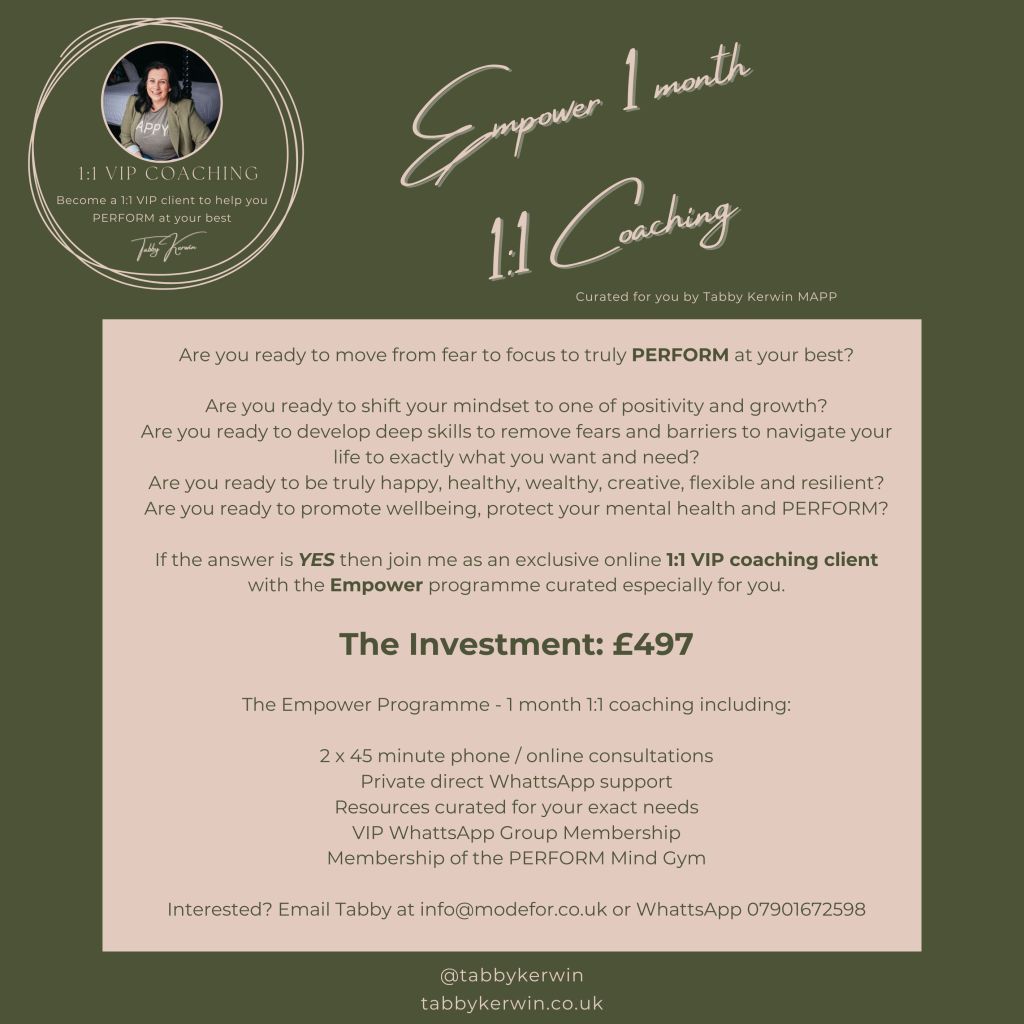
You can work with me 1:1 for a month on my Empower Coaching programme for £497. We can do so much in a month together. Sign up now at: https://sowl.co/s/bc8LVk

Much Love

Tabby x

Protect Your Mental Health: Strategies for Success

Whilst today is World Mental Health Day, protecting mental health should be and is an everyday job.

Currently 2 million people in the UK are stuck on waiting lists for NHS mental health services (source: Mind Charity). Many of these people are on the brink of crisis. Our services are overstretched and underfunded and changes need to be made at a systemic level… but…

On a personal and organisational level we CAN and MUST do more.

𝗛𝗼𝘄?

Well, by shifting the narrative around mental health from one of reaction to protection we can reduce the demand on our services.

𝗪𝗵𝗮𝘁 𝗱𝗼𝗲𝘀 𝘁𝗵𝗶𝘀 𝗺𝗲𝗮𝗻?

𝘼 𝙧𝙚𝙖𝙘𝙩𝙞𝙫𝙚 𝙣𝙖𝙧𝙧𝙖𝙩𝙞𝙫𝙚 is one that waits until someone is already experiencing mental distress, poor mental health or mental illness and then signposts them to the help they need.

𝘼 𝙥𝙧𝙤𝙩𝙚𝙘𝙩𝙞𝙫𝙚 𝙣𝙖𝙧𝙧𝙖𝙩𝙞𝙫𝙚 is one that equips people with the tools and strategies to promote wellbeing, build resilience and PERFORM at their best, meaning they are less likely, or never need, to access formal services. They have the capacity to deal with emotional distress WHEN it happens…

Because it will happen… whilst not everyone will experience poor mental health or mental illness, 100% of use WILL experience some kind of mental distress at some point (be that grief, work or financial pressures or local and global events, accidents etc) and it is our personal responsibility to be equipped with the tools to deal with this WHEN it happens; to build our own resilience and invest in healthy coping strategies every day.

This approach also means that there is then access to services to help those that truly need it.

Whilst I actively train people to recognise the signs and systems of mental health issues and signpost people to the help that they need, my wish and focus is to help people PERFORM at their best by equipping them with the tools they need to protect their mental health.

The work I do on a 1:1 and organisational level does this.

I have numerous 1:1 clients who can deal with huge stress and difficult events because they do the work to build resilience and constantly raise their performance standard by doing the work to protect their mental health. They can withstand really difficult things and thrive under stress and pressure.

I have multiple organisational and corporate clients who over the last few years have reduced their days off sick for mental health issues from the average 20% to 0% – this is through a dual approach of creating mentally healthy cultures and support systems and working with people on an individual level to increase their capacity to manage stress, build resilience and PERFORM at a high standard.

I am currently in a minority of people focussing on protection rather than reaction in the mental health field, but I’m not scared to ‘blow my own trumpet’ about the work I do, because it works. It saves lives, makes people happier and healthier and it increases the revenue of individuals and organisations.

For every £1 invested in me there is a clear return on investment of more than £5… so I’m worth every penny!

Are you ready to join me and shift the narrative?

Are you ready to be happier, healthier and increase the gains of yourself and your organisation?

From downloadable courses to private 1:1 coaching, organisation mental health audit to advise you on where you can improve to full organisational consultation, I have something to help you protect mental health, PERFORM at your best, promote wellbeing and create mentally healthy cultures at every level and every investment level.

I just need you to take 15-minutes to chat with me to find the most effective solution for you… and if you do I’ll give you a special discount code.

Drop me a message now to fix up a call.

Much Love

Tabby x

Unlocking Workplace Flow: Keys to High Performance

Looking for the key to unlocking high performance and satisfaction at work? The answer could be in achieving a ‘Flow State’.

Have you ever undertaken an activity and become so engrossed in it that time has felt like it has passed very quickly. Have you become completely immersed in your work and have felt at ease and productive? This is what is known as a Flow State or being in the zone.

Flow is an important element of peak performance. Flow Theory was introduced in the 1970s by Psychologist Mihaly Csikszentmihalyi who described it as “the holistic sensation that people feel when they act with total involvement”.

In the workplace, there are huge benefits from achieving a state of Flow, both on an individual and organisational level. A state of Flow allows for:

Improved Performance – productivity, creativity and problem-solving.

Greater Engagement – intrinsic (internal) motivation, higher energy, positive culture.

Promotion of Wellbeing and Protection of Mental Health – manages stress and reduces burnout through control and enjoyment, building resilient individuals.

Achieving Flow is imperative in work and life because work is a part of our lives. On average we roughly spend about 33% of our lives for around 40 years at work, therefore it’s important to foster Flow for health, happiness and satisfaction.

Flow does not just happen to people – it is a state that we can create for ourselves. Things that will help are:

  • Matching Skills to Challenges – make sure your level of skill matches the challenge in question but also allows for you to stretch your skills a little too. The sweet spot is making the challenge around 4% higher than your skill level.
  • Clear Goals and Feedback – set clear goals and be open to feedback to help with development of skills.
  • Focus your Attention – minimise distractions (digitally and physically) and interruptions.
  • Be in Control – a sense of ownerships increases confidence.

Two simple tips to enhance the probability of Flow in your work and life are as follows:

  • Where you feel the challenge exceeds your skill level – look to build your skills.
  • Where you feel your skills exceed the level of challenge – look for bigger challenges.

This may seem too easy an approach, but what it does is encourage an upwards spiral of growth and positive emotions, allowing you to become happier, healthier, more productive and satisfied in your work.

Laughter is the Best Medicine

Laughter is the best medicine…

Sounds like a flippant social media meme comment but it’s true… laughing has amazing physical and mental health benefits, such as:

 😆boosting immunity
 😆relaxing muscles
 😆decreasing pain
 😆lowering stress hormones
 😆improving cardiovascular health
 😆reducing anxiety
 😆building resilience
 😆increasing life satisfaction
 😆improving mood

If you do one thing today, laugh.

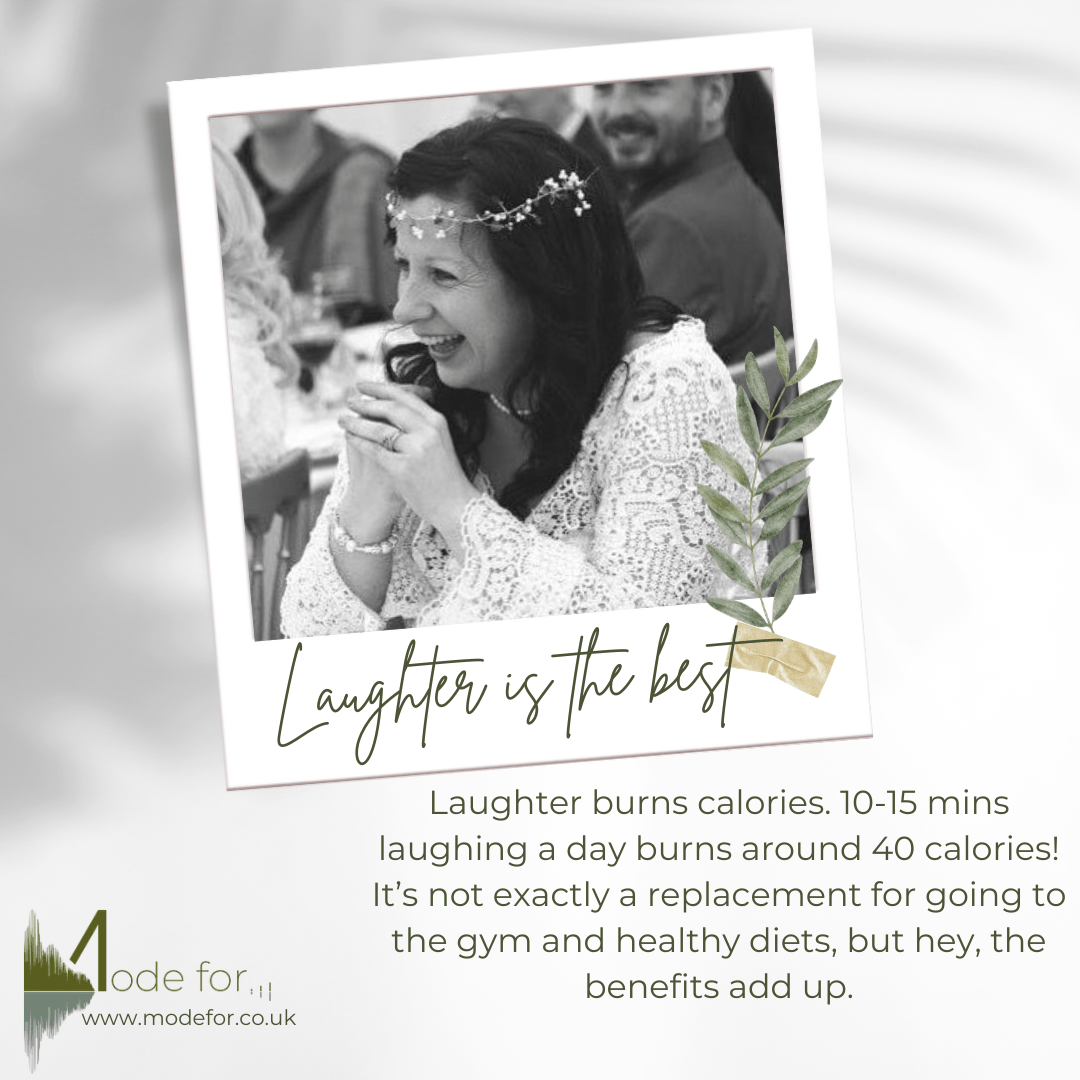
Plus laughter burns calories. 10-15 mins laughing a day burns around 40 calories! It’s not exactly a replacement for going to the gym and healthy diets, but hey, the benefits add up.

… and if you’re living with grief or any other trauma, don’t feel guilty about laughing. Sometimes when we are experiencing a loss of any sort we actively stop ourselves from feeling joy, for fear of judgement or the guilt that we should not feel happy when we are feeling so sad and in pain. But hear this… you can hurt, heal and be happy all at the same time. It is possible and it is allowed. So give yourself permission.


Change the narrative and laugh in places where you have cried.

Bring some joy back into your life and PERFORM at your best.

What joy can you bring into your life today and who can you laugh with?


It’s OK to Not Be OK … But, Equally, It’s OK to Be Great

We’re fairly rubbish at sharing thoughts, feelings and emotions, aren’t we? We have a tendency to hide feelings and this habit we have got into has not had a positive effect on the mental wellness of many of us. I say ‘us’ because I have been totally guilty of this in the past. I even still am sometimes.

I think it’s natural for us not to want to burden people or share things because we feel silly or ashamed, but do you know what, as the saying goes, ‘It’s OK not to be OK.’ Whilst I do often still play my emotional cards close to my chest, I have learned that sharing publicly, with those close to me and being honest with myself that I’m not OK is perfectly fine; in fact, it’s good.

Being honest about how you feel lets people relate to you and, most importantly, allows the right people into your life to support you. We all need to find our right ‘tribe’. Often those from the most unlikely sources become some of the greatest people in your life.

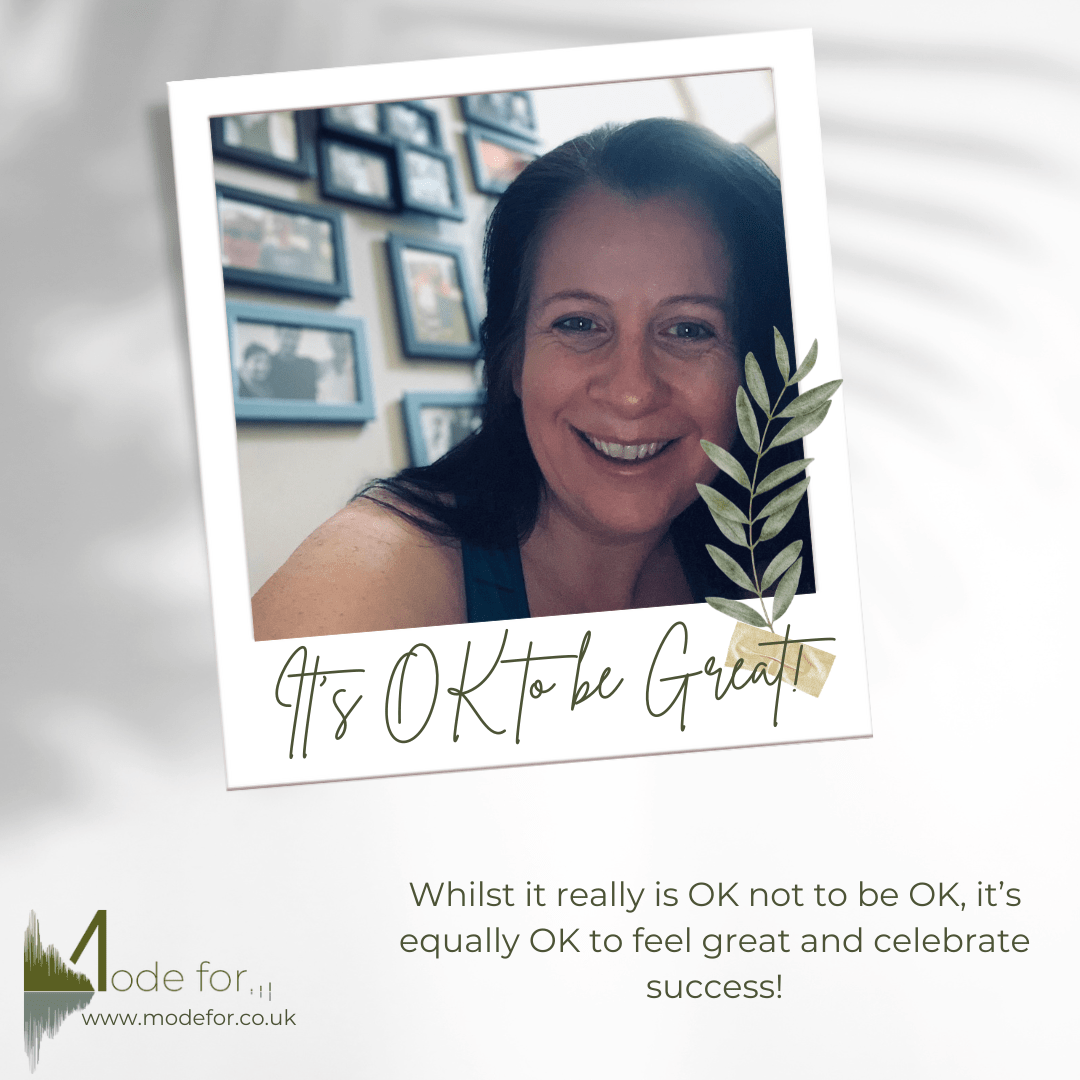
Whilst we’re quick to hide our troubles and sadness from the world, strangely we also seem to shy away from sharing all the great things in our life, too. Whilst it really is OK not to be OK, it’s equally OK to feel great and celebrate success. Be honest about your success and brilliance because it makes you feel good and proud. Anyone that can’t get on board and support you in your success can, to be quite frank, do one.

We should celebrate all the little wins in life and take time to appreciate them because this can give us motivation and incentive to go even further – and you need to be your own number one fan and champion. If others don’t like it, that’s their problem and they’re probably only jealous. Remember what we said about other people’s opinions: not your concern.

What little win have you got to celebrate? Make a list and celebrate them all. It doesn’t have to be with a huge party: a cuppa and five minutes’ peace and quiet is just as deserved a celebration.

Come and celebrate in my group at https://www.facebook.com/groups/thewaytoperform and why not read more in my book “The Three Ps: Possibility, Productivity and Performance” available here

Much Love

Tabby xxx