

Last week a new YouGov survey for GMB revealed increasing statistics around loneliness.
According to latest data:
81% of people say they are lonely
64% of those people didn’t tell anyone
59% of those people say there’s a stigma around loneliness
I’ve said before loneliness and alone are not the same thing. Just because you’re in a room full of people does not mean that you don’t feel lonely, equally just because someone chooses to be by themselves does not make them lonely.
Loneliness is one of the largest causes of poor mental health…. and that’s not saying it causes mental illness, but it can do if not addressed. Poor mental health is a step towards mental illness where low moods and anxious feelings can start to take hold. These can lead to feelings of helplessness, hopelessness and worthlessness and this can be dangerous.
People feel lonely for all sorts of reasons: grief, isolated in a relationship that isn’t working, working from home, children moving to university, young people moving to a new city for uni or work, death of pets, loss of friendships, financial hardship, not feeling understood and so many more reasons. This list is not exhaustive.
Loneliness is a feeling of disconnection and disconnection is a huge part of depression. Disconnection from people, places and possibilities.
… and yes, there is a stigma. Why? Because we don’t talk about it, we mask it, we feel like we are at fault or people will think badly of us.
Since losing Simon and especially since now living alone for the first time in my life since Oliver moved to university there are moments when I feel lonely and equally moments that I thrive on being alone.
I foresaw the possibility of loneliness spiralling negatively last year when I’d already experienced those feelings and that was a huge part of the reason I chose to go back to playing in brass bands, so I had some people in my life to connect to otherwise I knew I’d be living by myself, working from home alone and would literally go weeks without seeing or taking to anyone. I knew that was dangerous for me as, at heart, I’m an introvert – albeit an extroverted one! An ambivert if you like!
It’s also the reason I got my new kittens immediately my gorgeous Poppy cat died… because of loneliness. Within a day it was too quiet and I could feel what could happen.
Connection is key for emotional fitness and talking about loneliness is so important, to lift the stigma and help people flourish, so they don’t experience poor mental health.
Feeling lonely is common and normal. Please know that. But it doesn’t have to be that way. If you are lonely there will be a safe person for you to connect with but more importantly, let’s all just take responsibility to be that safe space, to connect to people and to tackle loneliness head on. A simple message to someone can make all the difference and could help someone thrive, and potentially save lives too, or sharing our own stories and experiences can bring comfort.
Let’s connect more. In our homes, friendships, work places, schools, music and sports teams and communities.
No-one needs to feel lonely at Christmas or any other time year.
Much love
Tabby 💚 xxx
Tag Archives: mental health
It’s Not the Journey or the Destination… It’s the People…
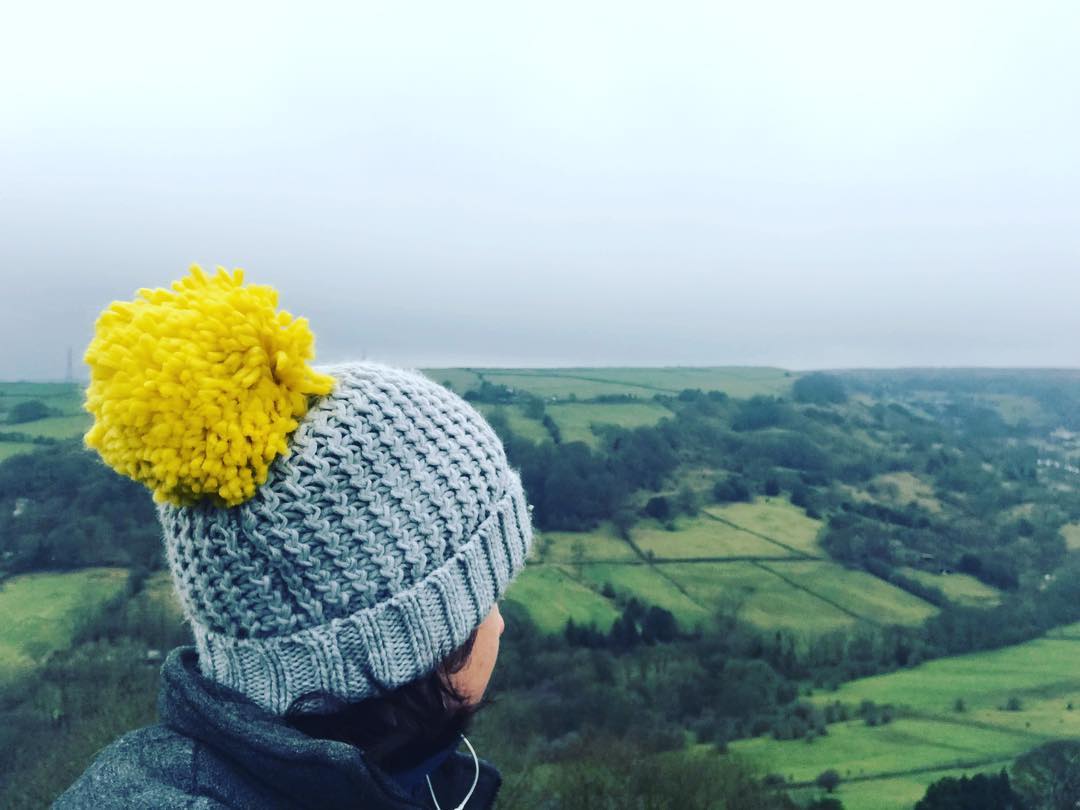
American essayist Ralph Waldo Emerson was quoted as saying “It’s the not the destination, It’s the journey” and over the years this has a been a useful reminder that the pathway to our goals is where we should be focussing our energy, celebrating and appreciating each step along the way.
Recently I’ve been thinking about pathways and goals and actually, I’m not sure if I 100% agree with Waldo!
Yes, the journey is important and, whilst it sounds cringey, life is a journey we need to embrace, however having goals is a key element to living a positive and emotionally fit life.
But the destination (AKA the goal) is super important. We need to know where we are headed, yet we also need to be super flexible about how we get there, or the journey we take.
Take for instance the thousands of students that received A-Level results this week. Many of them have goals, they want to be doctors, lawyers, vets or accountants. This is their goal, however, they may not have attained the grades they needed for first-choice universities.
This may be disappointing, but if they are flexible, they will find a place at another university and their goal is still strong, they are just taking a different pathway or journey to the destination. So in this instance, the destination is strong and the process to getting there is malleable.
But I want to add another possibility that really resonated with me after watching a recent episode of the Amazon series ‘All or Nothing’ which follows premiere league football club Arsenal.
In a team talk manager Mikel Arteta asks the team what is more important, the journey or the destination? The answer was neither – rather it was the company you kept along the way.
I love this and it’s got me really thinking since. In a world where we rely so heavily on tech it’s easy to forget the importance of people, but who we have on our team, who we share our goals with, who is by our side is the most important thing.
In order to be emotionally fit, in order to be healthy, in order to achieve we need to connect with others and gain support and be supportive, then the journey and destination are equally achievable and enjoyable.
So, who is in your team?
Much love,
Tabby xx
Building Resilience….
Resilience…
What is it?
Why do we need it?
How do we build it?
Tabby Kerwin takes a look at one of the fundamental elements of emotional fitness that allows us to live a healthier life and get back up and fight stronger when difficult situations come our way.
Resilience is the ability to easily adjust to misfortune or change whilst Hope is defined as a desire accompanied by expectation or belief in fulfilment or wanting something to happen (Merriam-Webster, 2021).
These two elements of hope and resilience are closely intertwined, acting as protective factors against adversity and for our mental health and following some recent research I posited that:
Hope + Action = Resilience + Mental Wellness
Protective factors are vital; they protect our mental health in contrast to risk factors which pose a threat to our mental health and in the same way physical fitness can be improved through physical exercise, emotional fitness can be improved through emotional exercise and it is these emotional exercises which are the Action in my Hope + Action = Resilience + Mental Wellness equation.
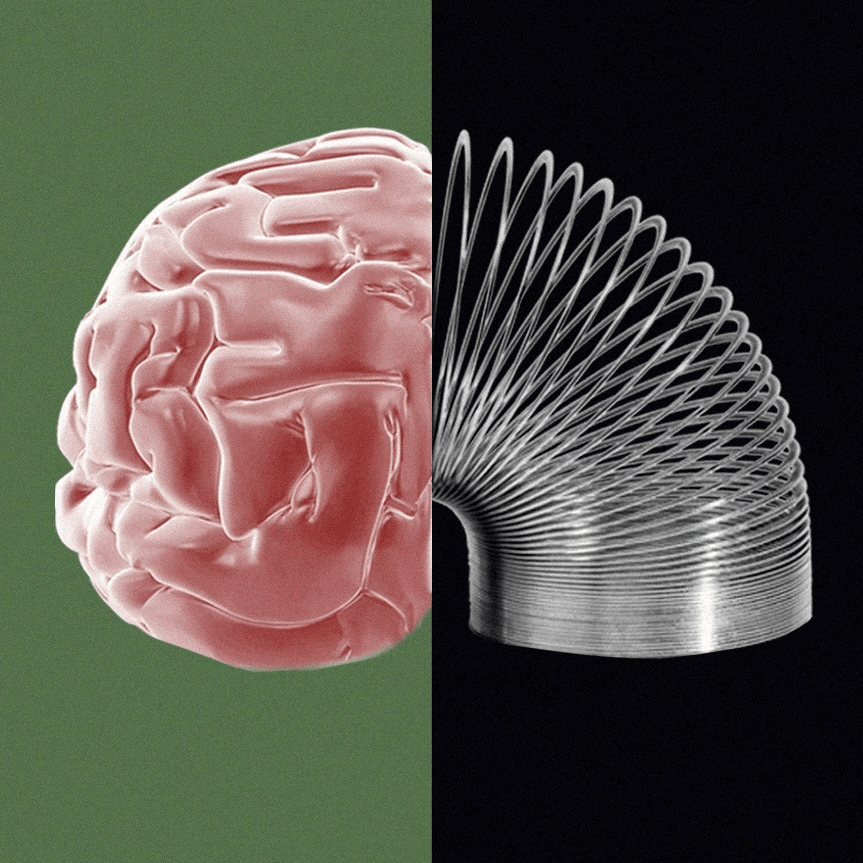
My personal definition of resilience is not just strength, but the ability to be stretched and then return to form (not always the same form), mentally or physically.
Evidence shows us that hope helps protect mental health (Leite et al,. 2019) and that it is resilience that helps people bounce back when they face adversity, but why do we need to build resilience?
A person who is resilient can work through adversity and challenges by using their strengths and other elements of psychological capital (resources a person can use to help improve their performance) such as hope, optimism and self-efficacy (someone’s belief in their capacity to perform) (Fontane Pennock, 2020). The more resilient you become, the stronger you feel and more mentally healthy you are. Resilience self-perpetuates where resilience builds more resilience.
When we develop our emotional fitness by utilising tools in our wellbeing toolkit we are not only building our resilience but we our increasing our levels of hope, boosting our mood and becoming mentally healthier.
What are the tools that can help us build resilience and emotional fitness?
- Visualisation
- Movement
- Breathing
- Meditation
- Journaling
- Gratitude
- Grounding
These are some of the examples of tools we should have in our wellbeing toolkit that we can use as a daily practise for preventative measures and use as continuing and maintenance tools, or in a moment of emotional distress.
To buy Tabby’s Book: ‘The Three Ps: Possibility, Productivity & Performance’ click here
Wearing a Mask

Wearing a mask become the new normal for us over the last few years, but when we refer to wearing a mask, we’re not always referring to the physical mask worn as a protection from Potential physical illness, but the metaphorical mask worn when someone is experiencing emotional distress.
I was part of a discussion about ‘maskless conversations’ over the weekend. It’s not often that we have these, in fact I do not always have them myself.
What do I mean by ‘maskless conversations’? Well, simply put, when we talk and are truly vulnerable, open and honest about how we are feeling with not just strangers but those closest to us.
As honest as I am there are still many things I don’t share. Why? Because sometimes people don’t need to know what’s in my head, or I don’t want to burden them, or that still intrusive, but much quieter, fear of judgement.
For people who wear that mask constantly (and I know many people who do but don’t even share that with those they live with), hiding their reality is a necessity, often due to feelings of shame, stigma and discrimination. The feeling that other people’s opinions are judgements of them and these opinions can sometimes manifest in discriminatory behaviours, so they would be better placed to hide their truth – to wear a mask and suppress all their emotions.
But the truth is that the constant mask wearing is exhausting and can make them feel worse until they lose themselves and stigma becomes the barrier to them getting the help that they need.
Awareness, education, open and honest conversations and implementing protective factors for better wellness will change this.
The phrase “if you need help just reach out and talk” is often heard, but the truth is if you’re wearing that mask it’s so difficult to talk. So we need to spin the narrative and create safe places and environments where talking about emotions, emotional fitness and mental health are completely acceptable, not just normal.
What environment are you in where you can do that? Be that at home, school, workplace, bandroom or sports club? Can you create an environment where having “maskless conversations” becomes psychologically safe?
Strike Up a Conversation – It’s Time to Talk Day 2022

MENTAL HEALTH:
Conversations have the power to change and save lives.
This week is #TimeToTalk day on 3rd February and an opportunity to start a conversation .
Whether it’s in person, via text, over a cuppa, in your bandroom or as you play football, start a conversation with someone to help them and you.
Talking and sharing are superpowers.
For more details and resources visit: https://timetotalkday.co.uk/download-a-pack/
timetotalkday #mentalhealth #wellness #wellbeing #starttheconversation #asktwice
Brass on the Mind goes free…
After a year of publishing the magazine ‘Brass on the Mind’, Mode for… director Tabby Kerwin and team have made the decision to make wellbeing and mental health content even more accessible to musicians in the brass band movement.
Based on the ethos of “doing what we love and loving what we do” Mode for… has always been a business for benefit, wanting to help and support as many people as possible through all its brands and as such, in 2022 ‘Brass on the Mind’ has moved from being a paid magazine to a free blog.
Content will be regularly added to the blog, all designed to support the wellbeing of brass band musicians, plus there will be more activity in the Facebook group, new seasons of the Podcast and Mode for… is working hard to create more free mental health and suicide prevention training opportunities for people in brass bands.
It is so important that we prioritise wellness and mental health in the brass band movement as by looking after the people we strengthen the movement as a whole. It has been great publishing the magazine, but the reality is we are never scared of mixing things up at Mode for… and having great content and contributors is amazing, but that content needs to be accessible to everyone to be effective.
I’m passionate about supporting wellness and mental health in the brass band movement as we have an opportunity to impact people’s lives in a positive way across many generations through music and camaraderie. By making Brass on the Mind completely transparent and accessible, Mode for… can really play its role in helping people and that feels so right and attuned to our ethos of “doing what we love and loving what we do”.
Check out the new blog over at www.modefor.co.uk
Much Love
Tabby x
 Mode for...